| Key Points |
|
Embarking on a home fitness journey can be both exhilarating and overwhelming. To set yourself up for success, it’s essential to establish specific, measurable, attainable, relevant, and time-bound (SMART) goals. Begin by breaking down your ultimate health objectives into smaller, manageable milestones that keep you motivated and on track. Maintaining a training diary can be an invaluable tool to monitor your progress and celebrate your achievements along the way. By setting realistic goals, you empower yourself to improve gradually while enhancing your overall well-being.
Embarking on a home fitness journey can be both exciting and overwhelming. The key to success lies in setting achievable goals that are tailored to your unique circumstances. By focusing on specific, measurable, attainable, relevant, and time-bound objectives, you can create a pathway to enhance your well-being. This article will explore how to effectively set and achieve your fitness goals right from the comfort of your home.
Understanding the Importance of Goal Setting
Establishing fitness goals is a crucial step in any exercise routine. Goals provide direction, motivation, and clarity. They transform abstract desires into concrete plans that can be executed on a daily basis. Whether you want to lose weight, build strength, or improve your overall health, having clear goals can significantly influence your commitment to the process.
The SMART Approach
The SMART criteria—Specific, Measurable, Attainable, Relevant, and Time-bound—is an excellent framework to guide your goal-setting activities. By applying this structure, each target you establish becomes clear and actionable. For example, instead of stating, “I want to get fit,” a SMART goal would be, “I will complete a 30-minute workout at least three times a week for the next month.”
Identifying Your Fitness Goals
The first step in setting achievable goals is to identify what you truly wish to accomplish. Consider the following questions to help clarify your objectives:
- What is my primary motivation for exercising at home?
- Am I looking to enhance my strength, flexibility, or cardiovascular fitness?
- How much time can I realistically dedicate to my fitness each week?
Your responses will help you set specific goals that resonate with your personal aspirations. For instance, if your motivation is to feel more energetic, consider goals that involve increasing your daily activity levels, such as taking brisk walks or short workout sessions.
Breaking Down Long-Term Goals
After pinpointing overarching fitness aspirations, it can be useful to break these down into smaller, achievable mini-goals. This strategy not only makes the process less daunting but also provides opportunities for celebrating small victories along the way. Instead of a distant goal like “I want to lose 20 pounds,” consider interim objectives such as “I will lose 1-2 pounds each week by exercising for at least 45 minutes on four days per week.”
Tracking Progress with a Fitness Diary
Keeping a training diary can be an invaluable tool for monitoring your journey towards your fitness goals. Documenting your workouts not only allows you to see how far you’ve come but also helps identify patterns in your performance and areas for improvement. Record details such as the types of exercises you performed, duration, and how you felt during each session. Over time, you will have a clearer picture of your progress and motivation levels.
Creating a Personalized Home Workout Plan
With your goals defined, the next step is to tailor a workout plan that suits your preferences, fitness levels, and available resources. Consider the following aspects when designing your home workout regimen:
- Exercise variety: Include a mix of cardiovascular activities, strength training, and flexibility exercises to target different aspects of fitness.
- Scheduling: Plan your workouts during times that best fit your lifestyle, ensuring consistency in your routine.
- Equipment use: Be mindful of the available equipment. If you’re working with minimal tools, focus on body-weight exercises or invest in a few essential items like dumbbells or resistance bands.
Staying Motivated During Your Home Fitness Journey
One of the biggest challenges in maintaining a home fitness regime is staying motivated. Here are a few tips to help you stay on track:
- Set up a dedicated workout space: Establish a specific area in your home where you’ll exercise, helping to create a designated workout zone.
- Join a community: Find online groups, forums, or accountability partners who can offer support and encouragement.
- Utilize technology: Consider using fitness apps or virtual trainers to enhance your workouts and provide guidance.
For more insights on how to keep your motivation peaked throughout your journey, visit this resource.
Utilizing Online Resources and Virtual Training
In today’s digital age, there is no shortage of resources available to aid your home fitness journey. Many online platforms offer workout videos, fitness challenges, and nutrition guidance. Explore various types of workouts available online, such as yoga, Pilates, HIIT, and more, to find what you enjoy the most.
Moreover, engaging with virtual trainers can provide personalized guidance and motivation. Check out this guide for more information on how to elevate your home routines through virtual training.
Assessing Your Fitness Level
Before embarking on any new fitness program, it is essential to assess your current fitness level. Understanding your strengths and areas for improvement is crucial for setting realistic goals. Simple tests can be performed at home to evaluate your cardiovascular fitness, strength, and flexibility. For assistance on conducting these tests, refer to this resource.
Adjusting Goals as You Progress
Your fitness goals may need to evolve as your journey unfolds. It’s perfectly normal to reassess and adjust your goals based on your experiences and achievements. If you find that your initial goals are too easy or too challenging, modify them to align with your current capabilities. This adaptability keeps the process engaging and allows for sustained progress.
Avoiding Common Pitfalls
As you pursue your fitness objectives, stay aware of common pitfalls that might hinder your progress. These can include:
- Setting unrealistic goals: Aim for goals that are challenging yet achievable to maintain motivation and prevent burnout.
- Overtraining: Listen to your body to avoid injury and ensure adequate recovery time.
- Neglecting nutrition: Remember that fitness goals should include a balanced diet that supports your active lifestyle.
Family Fitness Goals
Engaging your family in fitness pursuits can be a rewarding experience. Set family-oriented goals such as “We will walk together for 30 minutes every week” or “We will try a new home workout routine every Sunday.” Not only does this create accountability, but it also fosters a healthy, active environment. To learn how to effectively set family fitness goals, visit this guide.
Celebrating Achievements
As you achieve your goals, it’s essential to take the time to celebrate milestones along the way. Recognizing your hard work boosts motivation and reinforces positive habits. Whether it’s treating yourself to new workout gear or simply taking a moment to acknowledge your accomplishments, celebrating your progress keeps you focused on the benefits of your dedication.
Creating a Home Gym
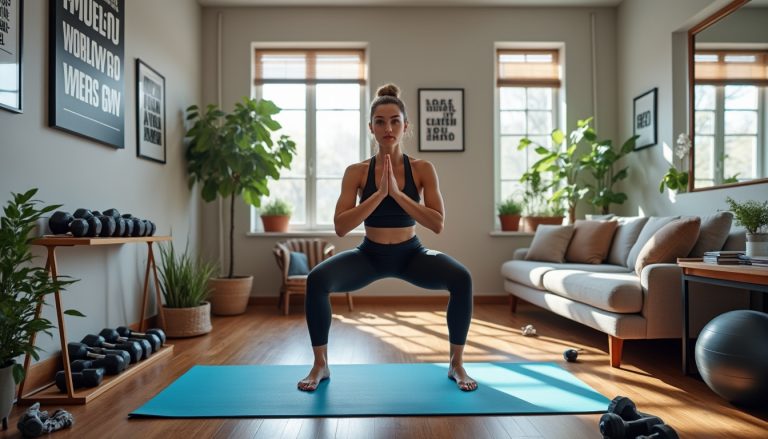
If you’re serious about home fitness, consider setting up a home gym. You don’t need a lot of space or expensive equipment to get started. Simple items such as a yoga mat, resistance bands, and dumbbells can create an effective workout environment. For a detailed look at how to establish a functional home gym, check out these essential tips.
Finding Your Right Balance
Balancing various aspects of your fitness routine—like cardio, strength training, and flexibility—is vital for comprehensive health. By mixing different workouts, you engage multiple muscle groups, prevent boredom, and promote overall well-being. Remember to rotate between different workouts and make adjustments based on how your body responds.
Setting achievable goals for home fitness involves understanding your preferences, maintaining consistency, and adjusting as you progress. The journey is uniquely yours—so embrace it with enthusiasm and dedication. As you continue on your path, remember to celebrate your achievements and keep an eye on both your physical and mental well-being.
Testimonials on Setting Achievable Goals for Home Fitness
“I used to feel overwhelmed by my fitness journey, but after learning about the SMART method, everything changed. Setting specific and measurable goals turned what seemed impossible into a series of achievable tasks. For example, instead of saying, ‘I want to get fit,’ I committed to a 20-minute workout every day for a month. Seeing my progress on paper motivated me to continue!”
“As a busy mom, finding time to work out was challenging. I realized I needed to set realistic goals that fit my schedule. I started by dedicating just 15 minutes each morning to a quick workout before the kids woke up. This small change made a huge difference; it felt good to accomplish something before my day even started!”
“The secret with home fitness is breaking down your big dreams into mini-goals. I started with one push-up a day, and within weeks, I could do ten! Each tiny victory built my confidence and made me eager to set even bigger challenges for myself.”
“I kept a training diary to track my progress, and it was eye-opening! The simple act of writing down my workouts enabled me to see how far I’d come. I set a goal to increase my long run by a quarter-mile each week, which helped me stay focused and measure my improvement effectively.”
“Initially, I struggled with motivation at home. But once I learned to set time-bound goals, my perception changed. I challenged myself to complete a 30-day workout plan by the end of the month, and having a deadline gave me the push I needed to stick with it!”
“I used to think I would be discouraged by setbacks, but setting realistic goals helped me enjoy the journey. Instead of aiming for an unrealistic body transformation, I began focusing on consistency, such as doing three workouts a week. It has made all the difference.”